
in the USA


FAQs for Loafing Sheds
Providing your livestock with a reliable place to escape the elements is vital for their health and well being. At Pro Metal Buildings, our loafing sheds (also known as run in sheds) are engineered to offer immediate shelter from sun, wind, rain, and snow. These three sided structures are the perfect solution for horses, cattle, and other outdoor animals.
What is a loafing shed and how is it used?
A loafing shed is an open-front steel livestock shelter that gives animals a “run-in” area for shade and weather protection. It’s commonly used in pastures and paddocks because it provides easy access and constant airflow, helping protect animals from summer heat and winter rain or snow.
What are the benefits of choosing a steel loafing shed?
Steel loafing sheds are popular because they are low maintenance, highly durable, and pest-resistant compared to many wood shelters. Steel does not rot, warp, or splinter, and it is non-combustible, which can improve overall safety. Some designs can also be installed with anchoring methods that make relocation possible if pasture layouts change.
Can I add a tack room or storage area?
Yes. Many owners choose a loafing shed with an enclosed utility or tack room alongside the open bay. This space is commonly used for hay and feed storage, tack and grooming supplies, and tools or small equipment, keeping essentials protected from weather.
What sizes are available for livestock shelters?
Sizes are flexible and should match animal type and herd size. As a general guide, small livestock often use roughly 10–12 ft widths, single-horse setups commonly start around 12 ft widths, and larger cattle groups often use 20–30 ft+ widths. Height is typically increased when more headroom and airflow are needed.
Do I need a concrete slab for a loafing shed?
Usually not. Many loafing sheds are installed on level ground or a compacted gravel pad, and dirt floors are common in pasture settings. Structures are typically secured with ground anchors appropriate to the site and wind conditions. If you add an enclosed tack or storage room, many owners choose gravel or a small concrete pad under that section to help keep supplies drier and cleaner.
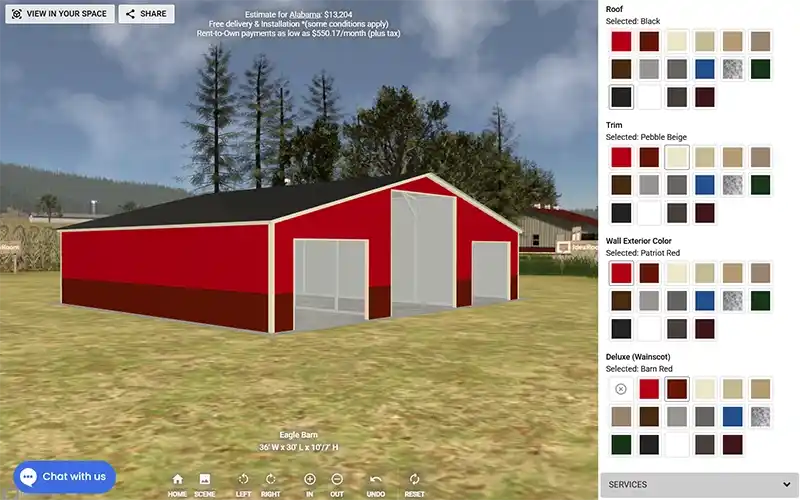
Try Our 3D Building Designer