
in the USA


FAQs for Warehouses
Why is steel the best material for a large warehouse?
Steel is the preferred material for large warehouses because it offers a high strength-to-weight ratio, fast construction, and low long-term maintenance. Steel buildings are fire-resistant, pest-resistant, and engineered for extreme weather, helping protect inventory and equipment. The modular nature of steel also makes future warehouse expansion simpler than traditional construction methods.
What is a clear span design and why is it important?
A clear span design means the warehouse has no interior support columns, creating a fully open floor plan. This is important for warehouses because it allows flexible pallet racking layouts, safe forklift movement, efficient loading zones, and uninterrupted assembly or staging areas.
How tall can a metal warehouse be for pallet racking?
Metal warehouses can be designed with eave heights of 20 feet or more, depending on local engineering and code requirements. Taller walls support vertical pallet racking and high-reach forklifts, helping businesses maximize storage capacity without increasing the building footprint.
Can these buildings handle large commercial loading docks?
Yes. Metal warehouse buildings can be customized with heavy-duty framed openings for large roll-up doors, dock-high loading bays, and oversized access points for semi-truck traffic. Many designs also integrate storefront or office entrances when needed.
Is insulation necessary for a commercial warehouse?
Insulation is optional but strongly recommended for warehouses with employees or temperature-sensitive inventory. Insulation helps regulate interior temperatures, reduce condensation that can damage goods, and lower noise from rain or equipment operations.
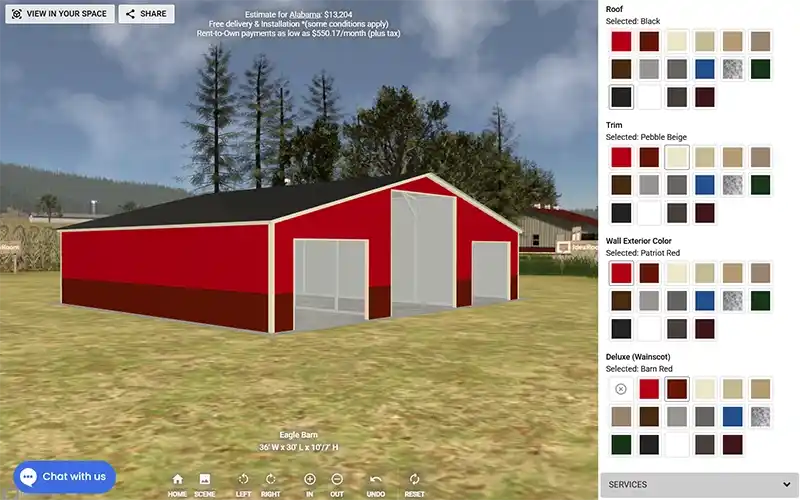
Try Our 3D Building Designer