
Design Your Own Custom Metal RV Carport
Design Your Own Custom Metal RV Carport

in the USA


About Our RV Carports
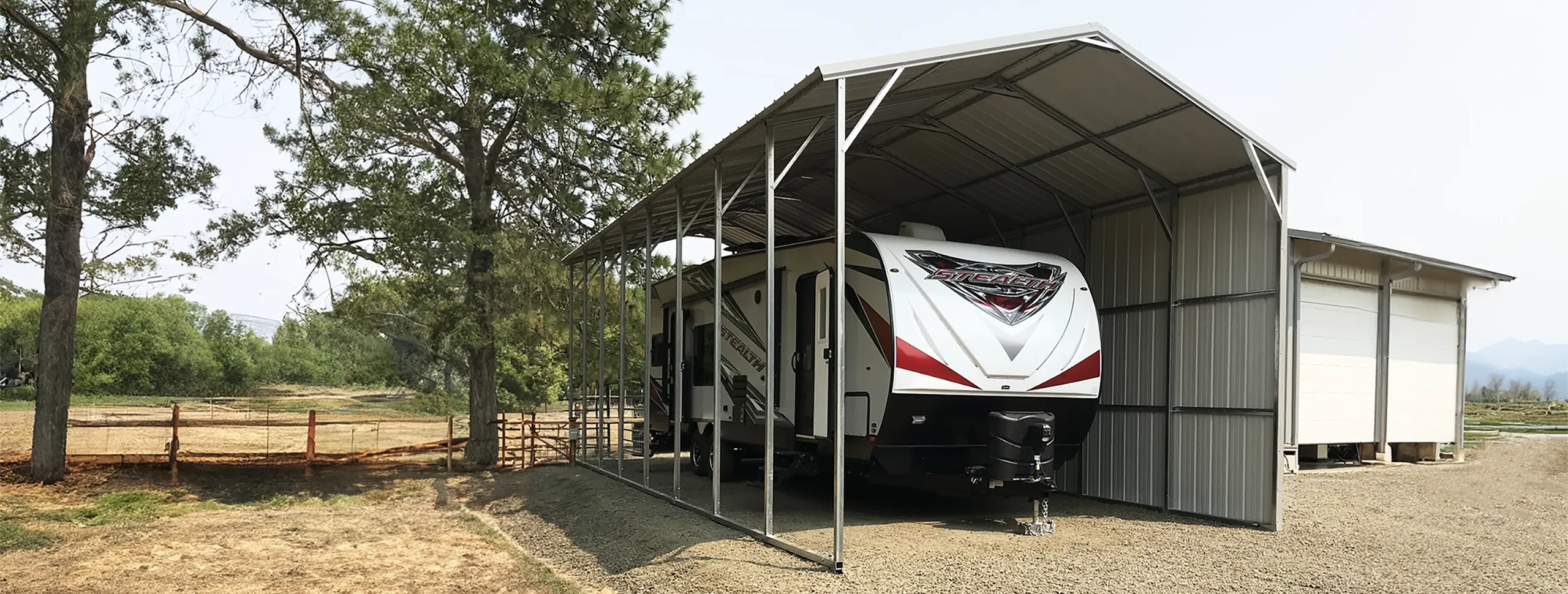
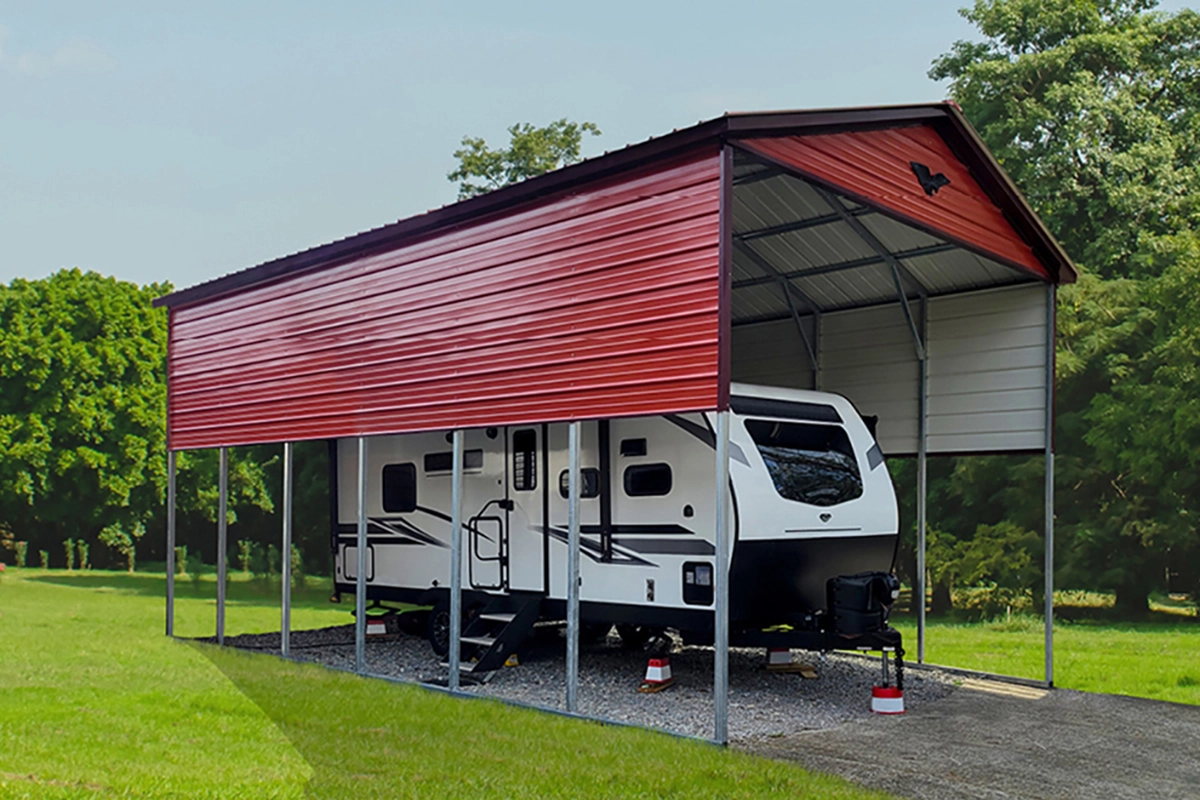
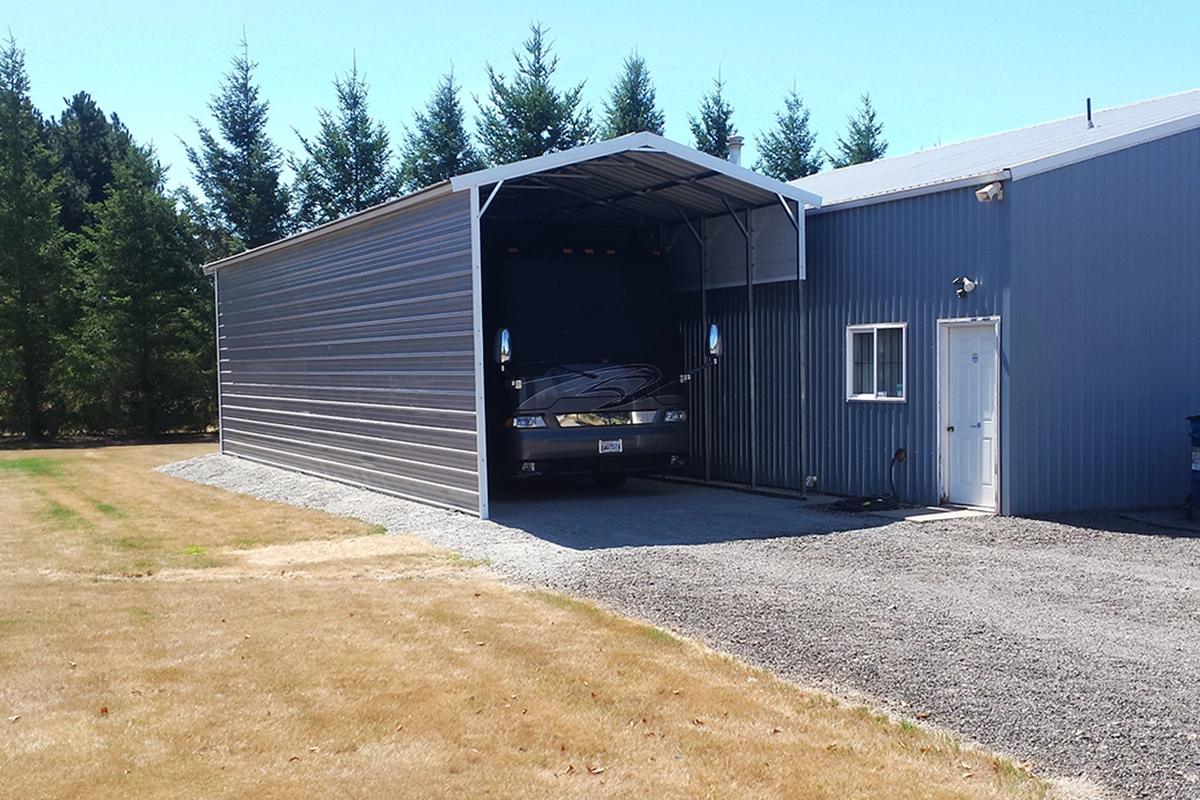
Protect your RV, Trailer or Motorhome with our customizable RV Carports. Stop wasting money on tarp or vinyl covers that last a year or two. These all-steel framed and sheet metal covers will protect your investment from the sun, rain, and debris that will last decades. We offer very tall covers for Class A, Class B and Class C motorhomes.
Free Nationwide Delivery & Installation
American-Based Manufacturing
Support Whenever You Need It.
Have a Quote? Give Us the Opportunity to Price Match!
Contact us for a free quote
What to Consider When Purchasing an RV Carport Cover
Choosing Your Class
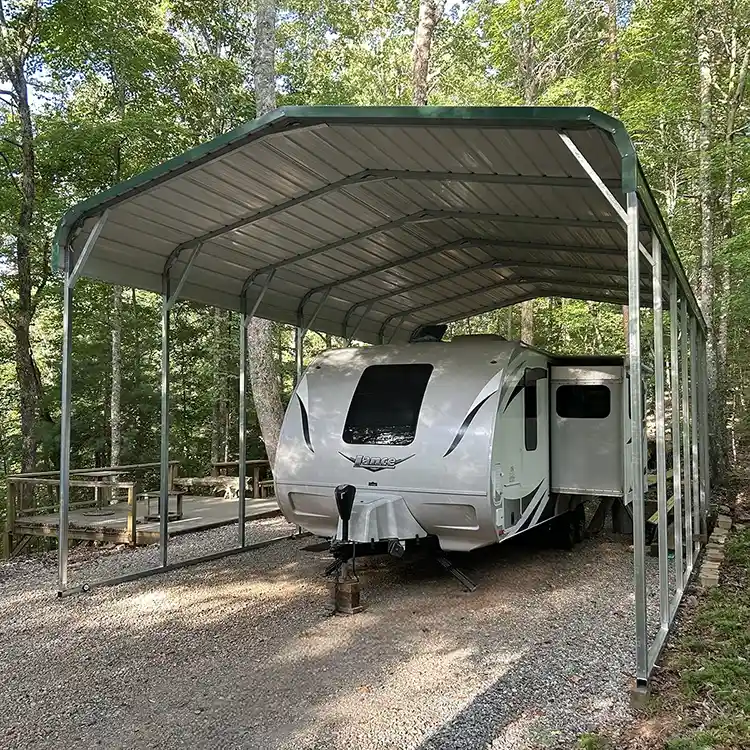
From compact camper vans to massive Class A motorhomes, the size of your RV is the first thing to consider when choosing a metal building. Each class has unique height, width, and length needs, and we’ll help you size it right.
RV Class Comparison Table
| Feature / Class | Class A | Class B | Class C |
|---|---|---|---|
| Typical Length | 25–45 feet | 16–22 feet | 20–35 feet |
| Typical Height | 11–14 feet | 7–10 feet | 10–12 feet |
| Typical Width | 8–9 feet | 6–8 feet | 8–8.5 feet |
Additional Considerations:
-
Side Mirror Length: Always add 1–2 feet of extra width to accommodate mirrors when choosing your RV cover width.
-
Tow Hitch: Consider additional length if you regularly store your RV with a trailer or tow vehicle attached.
-
Roof Clearance: Allow additional height clearance if your RV has roof-mounted accessories like solar panels, antennas, or air conditioning units.
-
Future Upgrades: Plan extra width, length, and height if considering future RV upgrades or accessory additions.
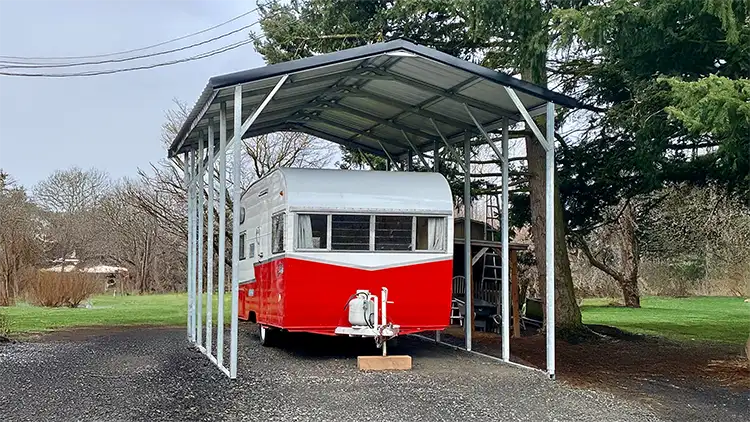
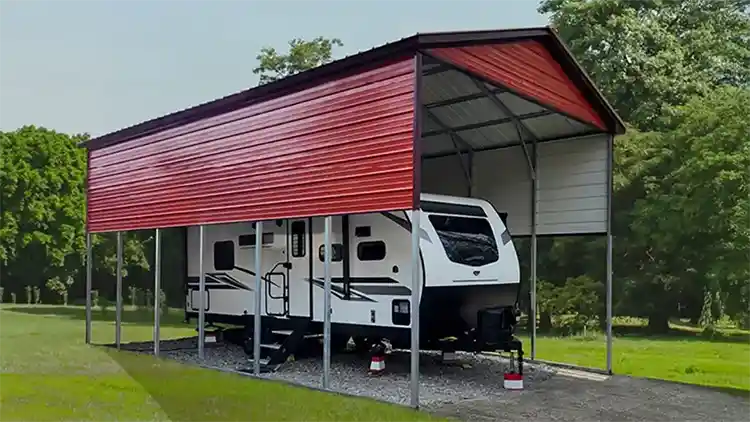
Enclosures: Open, A-Frame, Partially, or Fully Enclosed?
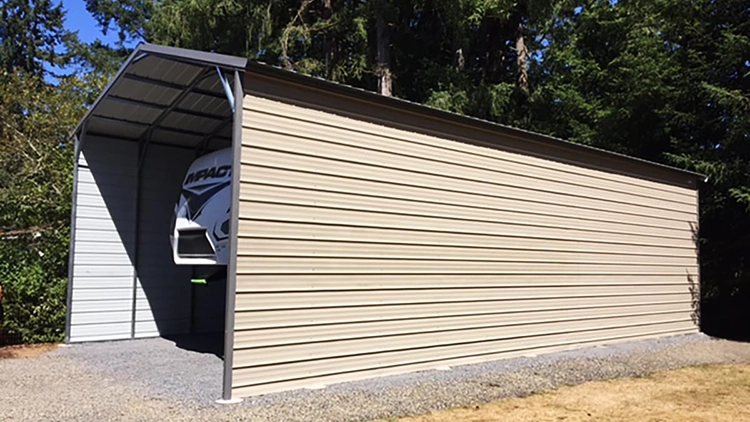
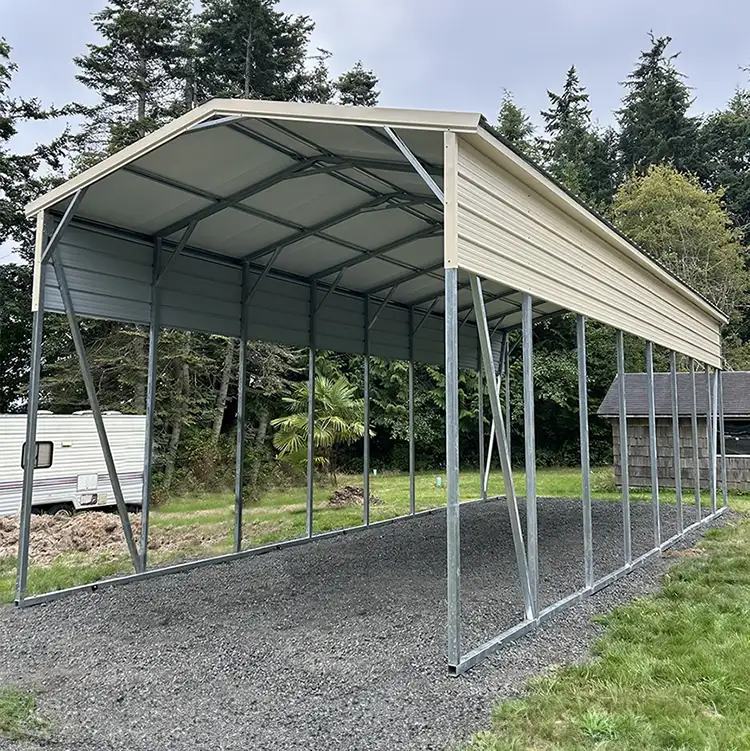
Open
A-Frame
Partially Enclose (three-sided)
Fully Enclosed
Examples Enclosure Types
Peace of Mind with Extra Protection & Features
Weatherproofing
Wind Resistance
Security
Debris Protection
Ventilation
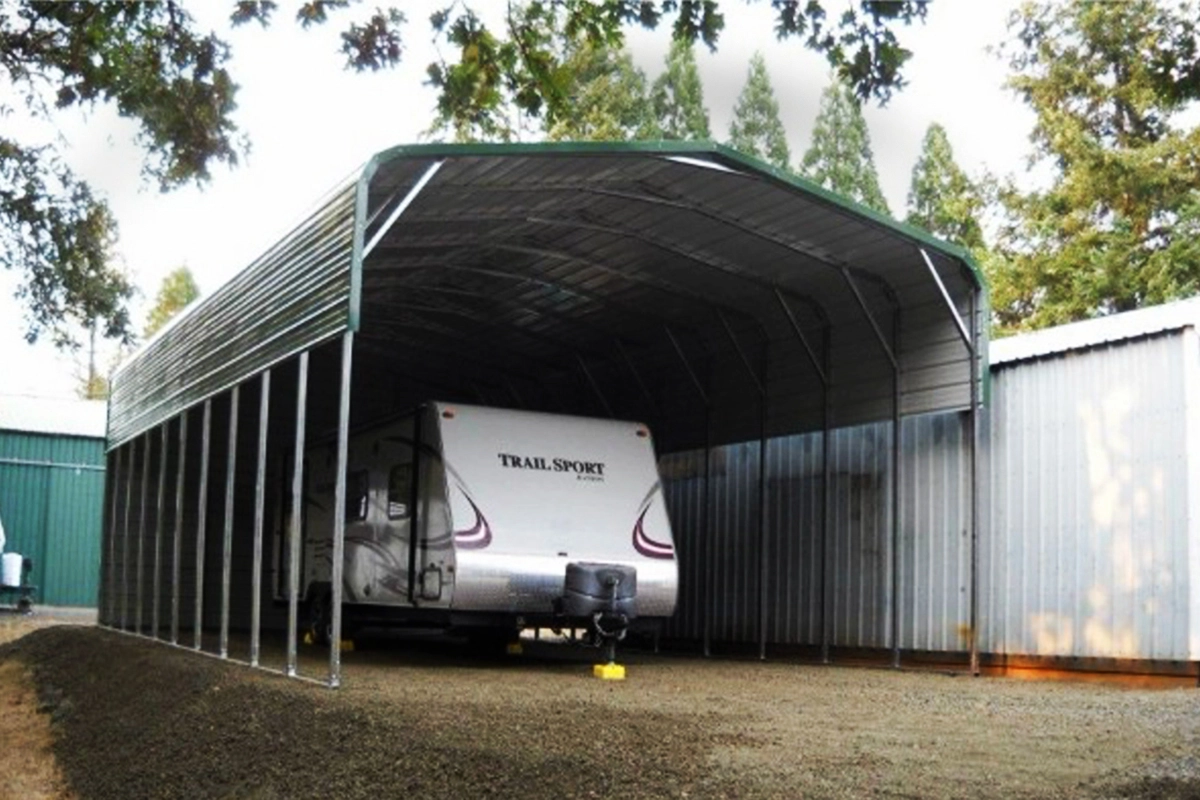
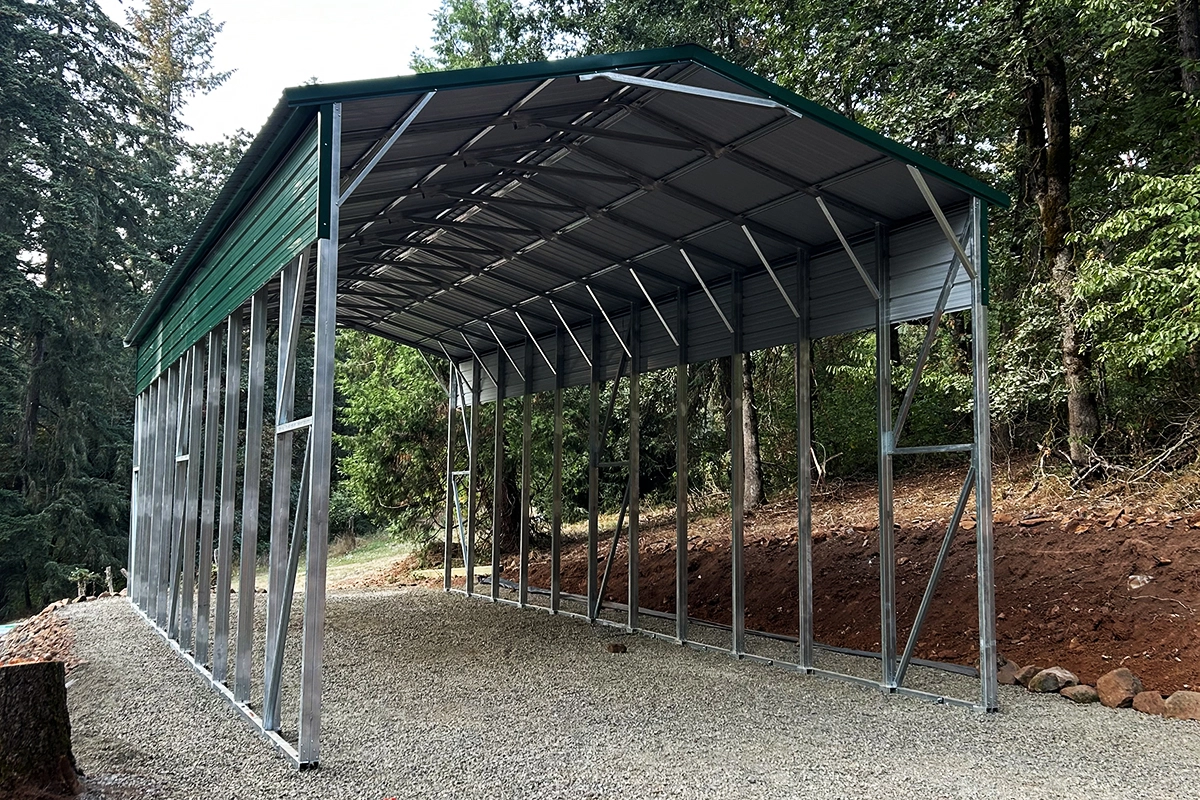
Image Gallery
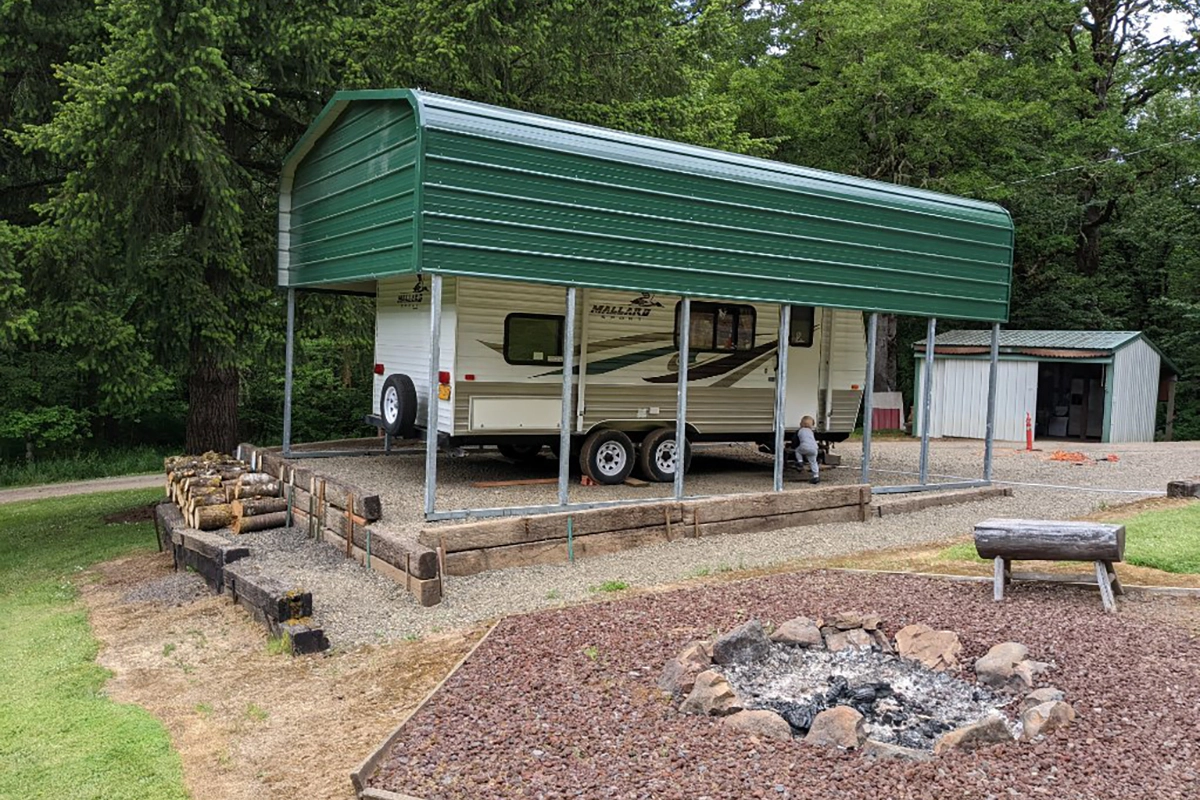
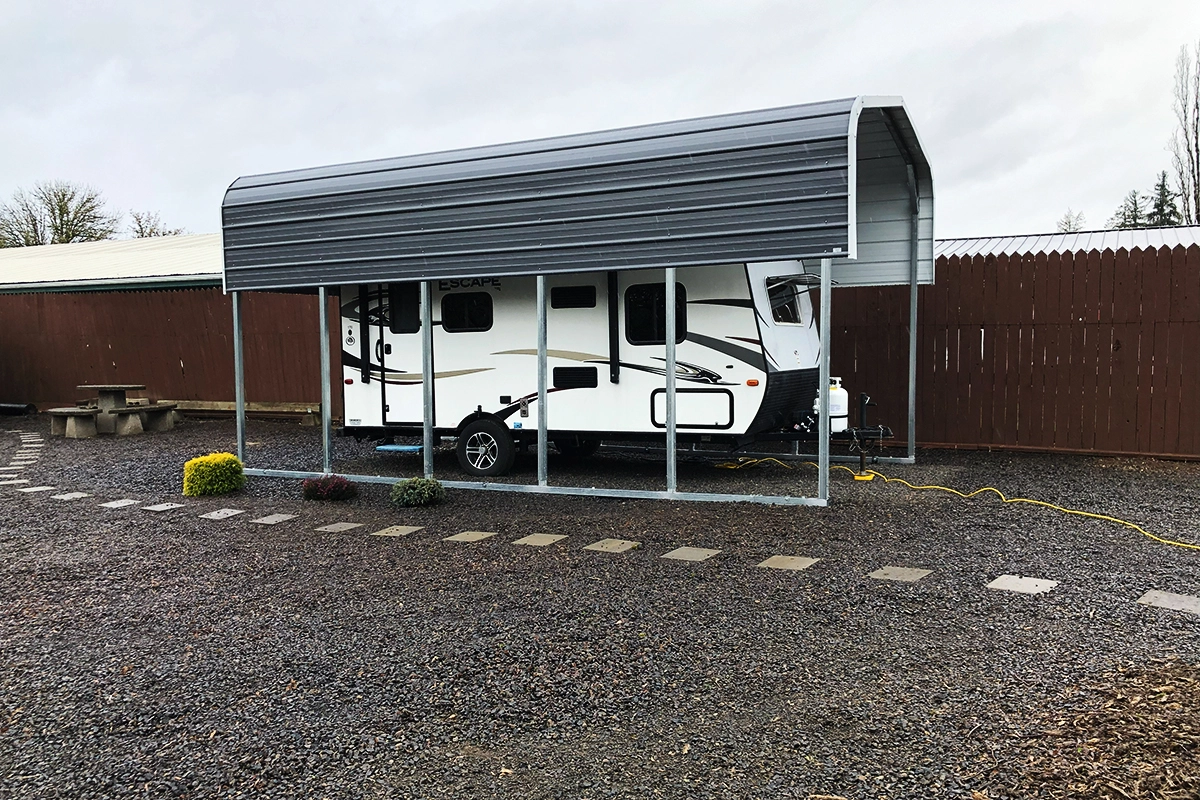
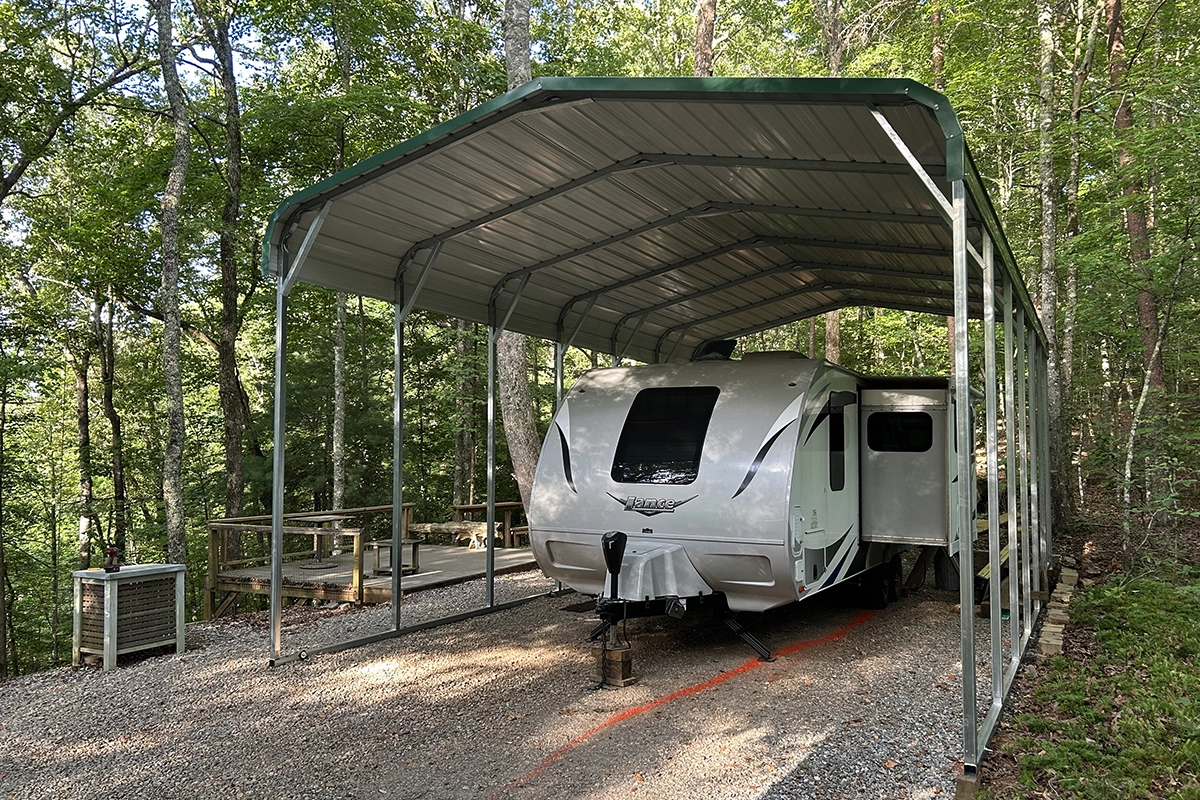
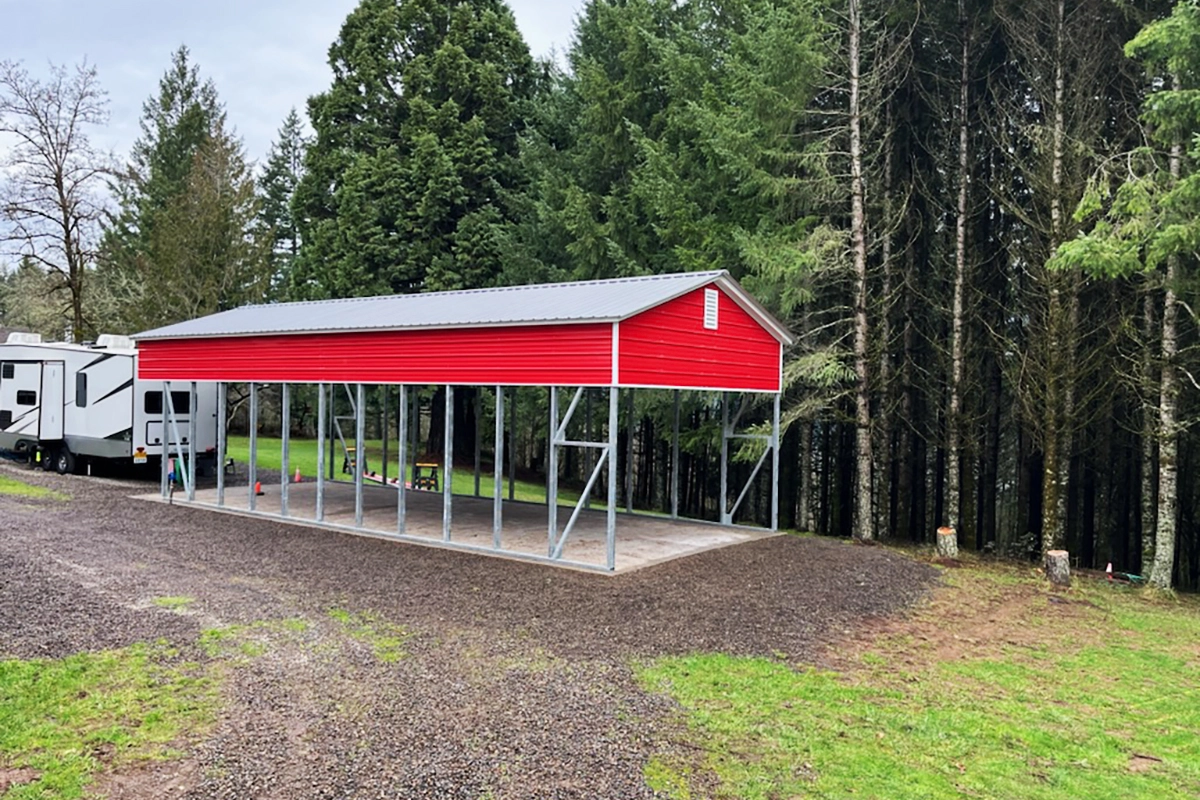
FAQs for RV Carports
Which roof style is best for my RV?
Regular (boxed-eave) roofs are economical, and best for mild climates.
A-frame (horizontal panels) are an aesthetic preference for some. Great for wind resistance.
Vertical roofs are top-rated for durability—allowing snow and rain to efficiently slide off your building.
Learn more about roof styles here.
What materials are used for Pro Metal Buildings RV carports?
Our RV carports are built with heavy-duty steel frames and panels, available in Galvalume or painted steel finishes. These materials ensure greater strength and longevity with minimal maintenance—ideal for even for the harshest environments.
What class is my RV, and how do I find out?
RVs are grouped into four main classes: A, B, C, and towables — each with its own size range. To determine your RV Class and fit, measure your RV’s width, length, and height, then compare it to our RV class sizing chart or use our 3D builder to match your vehicle.
How do I choose the right size for my RV carport?
Measure the width, length, and height of your RV—including any slide-outs. A 12-foot-wide carport suits units without slide-outs, while 18-foot width accommodates slide-out models. Length and height should exceed your RV’s dimensions to guarantee clearance.
The ideal height for your RV carport depends on the type of RV you own.
- Travel Trailers and Class C RVs: Most customers select a 10’–11’ leg height, which provides sufficient clearance for these RV types.
- Class A Motorhomes and Fifth Wheels: These larger RVs typically require a 12’–13’ leg height.
- Fully Enclosed RV Carports: If you plan to fully enclose your RV cover with a roll-up door: Choose a 14’ leg height for a 12’ tall roll-up door Choose a 16’ leg height for a 14’ tall roll-up door This allows for proper clearance and smooth entry.
Width affects both comfort and usability.
- 12’ Wide (Minimum): Suitable for storage-only purposes. Since most RVs are approximately 8’6” wide, this option offers limited side clearance.
- 15’–18’ Wide (Recommended): Ideal if you want space for slide-outs, walking room, and easier maneuvering.
- Interior Width Note: All carport widths are measured outside-to-outside. A 12’ wide carport provides approximately 11’7” of usable interior space after framing.
Do I need a foundation or base plates?
Lightweight kits may use metal base plates anchored to concrete footings—often without requiring permits. For permanent structures, setting posts directly in concrete is common. Pro Metal Buildings can advise you based on your site.
Contact us today to learn more.
Is a building permit required?
Permit requirements vary by jurisdiction, and the customer is responsible for contacting their planning department to determine if one will be necessary for the building they are purchasing and for the installation location. If your structure is permanent and set on concrete, a permit and engineered plans are often required. We can supply the Engineered Drawings and Calculation Drawings for an additional cost.
Contact us to request engineering and calculation drawings.
How long does delivery and installation take?
Typically, kits ship within 2–4 weeks after ordering. Standard kits include pre-cut steel framing and panels, plus easy-to-follow instructions for assembly.
Check out our installation videos.
What tools are required to install an RV carport kit?
Most installations require basic tools: power drill (or tek gun), rivet gun, saw/snips, tape measure, level, shovel, ladder, silicone gun, and safety gear. Our pre-cut components make the process simple and streamlined.
Check out our installation videos.
Can I customize my RV carport?
Absolutely. Through our 3D Builder, you can choose your structure’s dimensions, roof style, framing thickness, panel colors, trims, optional side or end walls, and more.
All Pro Metal Buildings structures can be customized with additional height or roof clearance to accommodate solar panels, rooftop air conditioning units, and other accessories.
Customize your own RV Carport and get an instant quote here.
Can my RV remain in place during installation?
Yes, in most cases, your RV can stay in place while the carport is installed.
Please note: Additional fees may apply due to increased liability. Approval depends on site access and installation conditions. Our team will review your site ahead of time to ensure a safe and efficient installation.
Can I add doors, insulation, or windows later?
Yes. Doors, insulation, windows, and other upgrades can be added during the initial build or installed later, allowing flexibility as your needs or budget change.